How to Tell If a Candidate Used AI on a Take-Home Test
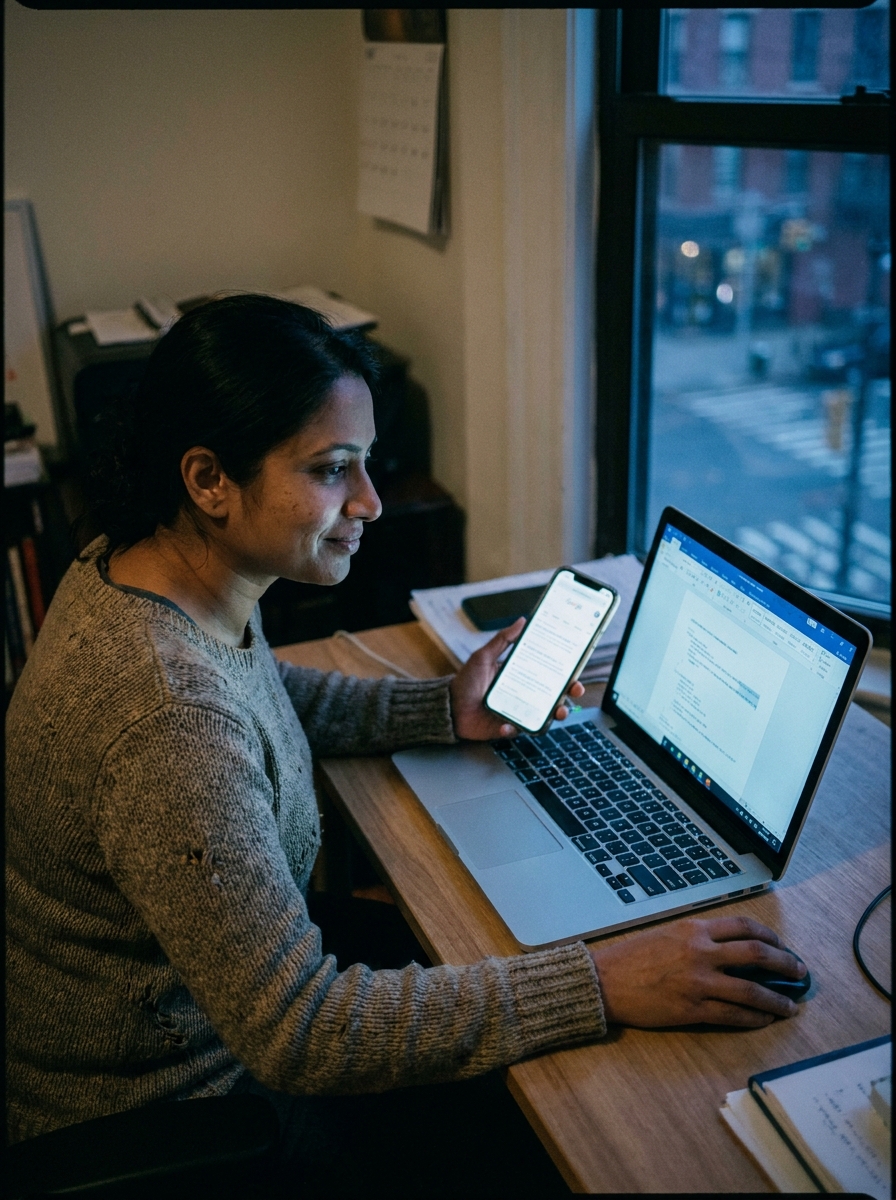
You read the answer twice. It's fluent, well-structured, hits every point you'd want — and it feels like nobody. No opinion, no rough edge, no sentence that sounds like the person who showed up for the phone screen. You open a new tab and paste the question into ChatGPT. Word for word, there it is.
This is a normal moment now. It's worth having a plan for it instead of just feeling annoyed.
Why this is harder than "cheating" used to be
Copying an answer off a forum used to be lazy and easy to catch. AI-generated text is different — it's often genuinely good, tailored to the exact question you asked, and impossible to prove with a quick search. You're not catching plagiarism anymore. You're trying to work out whether the person in front of you can actually produce the thinking the answer displays, or whether they can only produce it with help.
That distinction matters because the honest answer is: for some jobs, using AI well is part of the job. For others, it's exactly what you're trying to test past.
Signs worth noticing in written answers
None of these prove anything on their own. Together, they're worth a second look.
- The answer is suspiciously balanced. Real people writing under time pressure pick a side, cut corners, or leave a section thin. AI output tends to cover every angle evenly, like a summary rather than a decision.
- The vocabulary jumps. A candidate whose cover letter and LinkedIn messages read plainly suddenly produces a take-home with words like "leverage," "holistic," or "multifaceted" they've never used before.
- It answers the question you meant, not the question you asked. People working from a prompt sometimes paste your question straight into a chatbot, which quietly smooths out your specific wording into a generic version of the question.
- There's no mess. No crossed-out line of reasoning, no "I wasn't sure so I assumed X." Real work usually shows its seams.
Signs worth noticing live
In a video interview, the tells are different:
- Eyes moving to a fixed point off-camera, especially just before a detailed or technical answer.
- A pause that's too long for "thinking" but too short for "reading a screen slowly" — often followed by an answer that's oddly complete for something delivered off the cuff.
- Answers that don't connect to the follow-up question. Someone reading a generated response can handle the first question well and then stumble badly the moment you ask "why did you choose that approach over the obvious alternative?"
That last one is the most useful test you have. AI can produce a good first answer to almost anything. It's much worse at defending a position it didn't actually reason through, live, under a question it didn't see coming.
What to actually do about it
Redesign the test before you redesign your suspicion. If every candidate is producing similar, polished, slightly generic answers, the problem might be your question. A prompt with one right answer is easy to outsource to a chatbot. A prompt that asks for a decision about your specific, messy, real situation — with constraints only you would know — is much harder to fake convincingly.
Add a live follow-up to any written work. Five minutes of "walk me through how you got here" after a take-home test does more to separate genuine skill from borrowed polish than any amount of staring at the text for tells. Ask about a decision they made and why they didn't make a different one. Someone who did the thinking can go deeper. Someone who didn't, can't.
Decide in advance whether AI use disqualifies someone, and say so. Some roles genuinely require using AI tools well — writing, research, some sales and marketing work. Banning AI outright and then being unable to enforce it just teaches candidates to hide it. It's more honest to say up front: "use whatever tools you'd use on the job, but be ready to explain and defend every decision in the interview." That reframes the test from a purity check into what it should have been all along — can this person produce good judgement, with whatever help they'd actually have at their desk.
Don't accuse without something concrete. "This reads like it might be AI-generated" is a hunch, not evidence, and confronting someone with a hunch usually just makes an honest candidate defensive and a dishonest one better prepared next time. Use the follow-up conversation to find out, rather than the accusation.
Where proctoring genuinely helps, and where it doesn't
For timed, live assessments, proctoring with an integrity score — flagging tab-switching, unusual pauses, or a second voice in the room — closes off the crudest version of this problem, which is why AssessFit's tests run proctored with that score attached. But it won't tell you whether a take-home essay was drafted with help two days before submission, and no tool will. That gap is exactly why the live follow-up question matters more than any detection method: it tests understanding, not just origin.
The judgement call underneath all of this
The honest position is that you're not really trying to catch AI use. You're trying to find out whether someone can think, decide, and defend a decision under a question they didn't prepare for. That was always the actual test, even before AI existed — it's just gotten easier to fake the surface of competence and harder to fake the depth of it. Build your process around the depth, and the surface stops mattering as much as it feels like it should.
Test 5 candidates every month, free forever. No credit card.
Start free